Curb Appeal Fort Worth: The 7% Difference Before You List
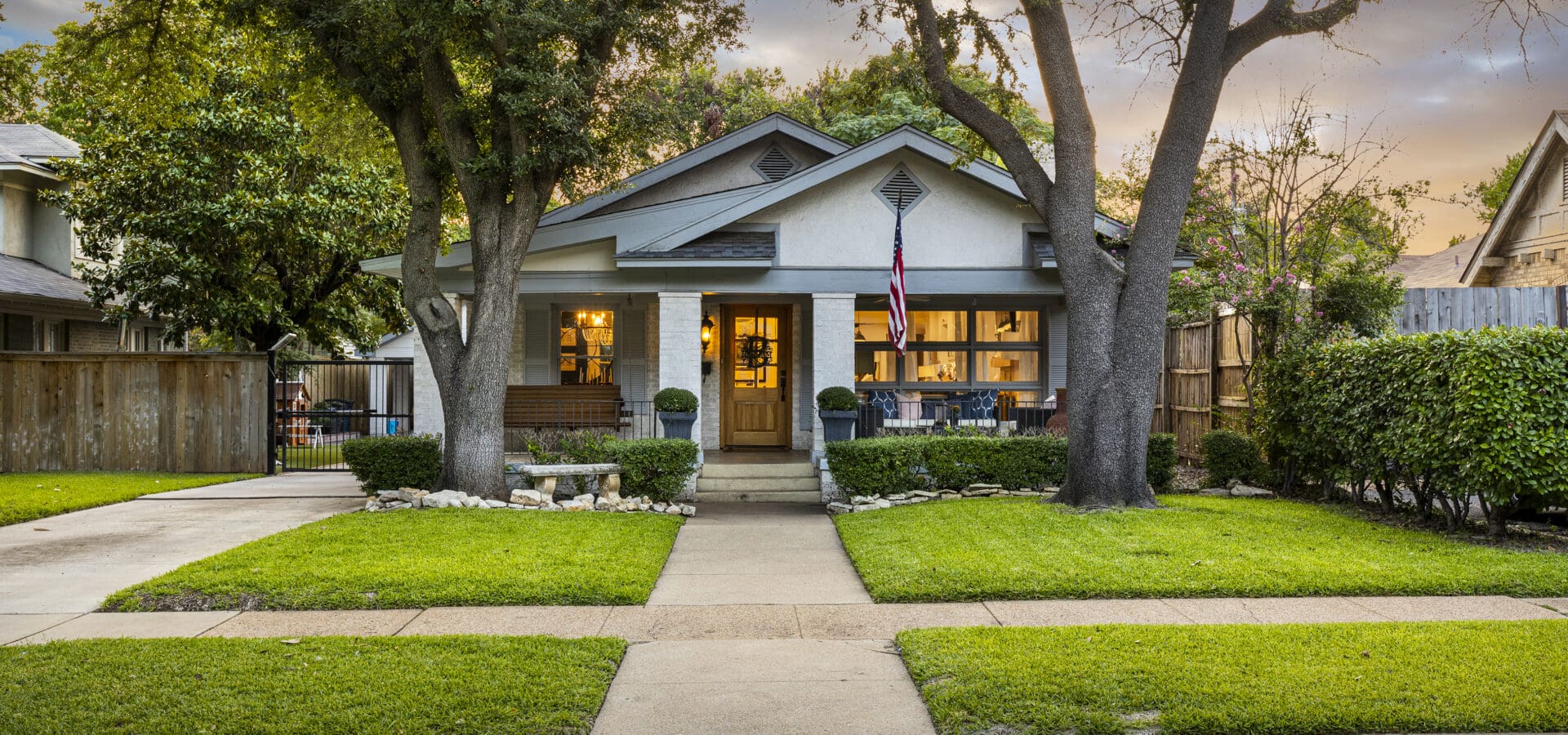
A car slows down outside your house before anyone gets out.
That’s the moment. Not the walk-through. Not the open house. The moment someone decides, from the street, whether they want to see more.
Curb appeal in Fort Worth is not a decorating trend. It’s the first test every buyer runs, and most of them run it without realizing they’re doing it.
In our Pineapple Post newsletter this spring, we put it plainly: strong curb appeal can raise a home’s perceived value by up to 7 percent, and homes that feel welcoming from the street tend to sell faster. That’s not a marketing line. That’s what buyers decide the moment they pull up, before they’ve walked through a single room.
Here’s what actually moves that number, and why curb appeal before selling in Fort Worth works a little differently than it does anywhere else.
What Actually Moves Curb Appeal in Fort Worth
Fort Worth landscaping for sellers does not require an overhaul. Fresh mulch. Seasonal color. Trimmed edges. A clean walkway. Four small jobs, done well, outperform one expensive job done halfway.
The math backs it up. Two cubic yards of mulch, enough to cover most front beds two inches deep, runs $60 to $100 delivered. A few pots of seasonal color cost $2 to $10 each. Power washing a walkway runs $180 to $240, or closer to $100 if you rent the equipment yourself. Put it together and a real curb appeal refresh in Fort Worth lands in the $300 to $1,000 range, not the $8,000 to $25,000 range of a full exterior overhaul.
Nationally, research out of Virginia Tech [LINK: The Effect of Landscape Plants on Perceived Home Value, https://www.pubs.ext.vt.edu/426/426-087/426-087.html] found that high-quality landscaping adds 5 to 12 percent to a home’s perceived value. Fort Worth’s own number, the 7 percent figure from our research this spring, sits right in the middle of that range. That’s the curb appeal ROI Fort Worth sellers can actually expect, and it’s achievable in a weekend.
The Walkway Is Doing More Work Than You Think
Buyers touch the walkway before they touch anything else in your house. A cracked, stained, or weed-lined path tells them something before they’ve said a word.
Power washing handles most of it. Where the concrete itself has shifted or cracked, patching beats replacing almost every time. Buyers are not judging whether your walkway is new. They’re judging whether it’s cared for. Those are two different things, and the second one is the one that matters.
What Actually Survives a Fort Worth Summer
Plant something that looks good in April and dies by July, and you’ve paid for a two-month curb appeal boost. Fort Worth Botanic Garden steers homeowners toward native plants for exactly this reason. They hold up.
Red yucca sends up coral flower stalks from spring through fall and takes full sun and reflected heat without complaint, which makes it a natural pick along a driveway or front walk. Texas sage and autumn sage do the same work in silver foliage and purple and red blooms, and neither one asks for much water once it’s established.
That’s the difference between curb appeal that lasts through closing and curb appeal you’re replacing before the second showing.
The Neighborhoods That Already Figured This Out
Walk Fairmount or Berkeley Place on any weekend and you’ll see this already working. Picket fences. Classic color palettes, soft grays, creams, earth tones, that let the Craftsman bungalows and Prairie-style homes do the talking instead of competing with them.
Nobody there is chasing a trend. They’re maintaining what already works, and buyers can tell the difference between a yard that’s cared for and one that’s simply mowed.
Ryan Place and Mistletoe Heights tell the same story from a different angle. Deep front setbacks, wide lawns, and foundation beds that have been replanted every season for decades, not overhauled once and forgotten. That consistency is what curb appeal actually means in an established Fort Worth neighborhood. It is not a one-time project before a showing. It is upkeep, done the same way, year after year.
The same rule holds out west in Walsh, one of the newest and largest communities Fort Worth has seen. The HOA there often handles front yard maintenance already. Curb appeal in a neighborhood like that shows up somewhere else. A pressure washed walkway. Fresh color on the porch. The small details a maintenance crew was never going to think about. Different neighborhood. Same test. Buyers still notice what has been cared for and what has not.
The Best Time to List a House in Fort Worth
Fort Worth’s spring listing season means more buyers walking more neighborhoods than any other stretch of the year. A house that photographs well online still has to hold up when someone actually parks in front of it. The homes that clear that test get the showing. The ones that don’t get scrolled past.
The data on the best time to list a house in Fort Worth is specific, not just a general spring is better feeling. Homes listed the week of April 12 through 18 get roughly 23.5 percent more views than an average week. They also sell nine days faster. And they list for about 5.8 percent higher, close to $24,000 more on a typical Fort Worth home.
Curb appeal is exactly what has to be ready before that window opens, not scrambled together after the first showing request comes in.
That’s true whether you’re listing in three weeks or three months. Mulch, color, edges, walkway. Doing it early means your house is ready the moment the calendar is.
None of that works if the maintenance underneath it is falling behind. We cover what buyers actually check once they’re past the front yard in our piece on what a well maintained Fort Worth home really means.
You don’t have to figure out which of these jobs matters most for your specific house before you call us.
We’ve been looking at Fort Worth curb appeal since 1958, long enough to know a $60 bag of mulch from a $4,000 landscaping bill that doesn’t move the number any further. Most of the time, it’s the smaller job that gets the offer.
Fort Worth families keep coming back to Helen Painter. They trust us to help them make the right decision. Since 1958.