

Texas is widely known for its vast size, boldness, and beauty—which helps explain why so many people are choosing to relocate to the Lone Star State.
The state offers a rich mix of attractions, from its Southern style to great cuisine, a vibrant music scene, and diverse entertainment options.
What’s the average cost of living in Texas? Overall, Texas is known for being more affordable than many states, with a cost of living roughly 7–8% lower than the national average (depending on the source and year).
Biggest factors: Housing is often lower than the U.S. average, groceries can be below average in many cities, while utilities and property taxes can run higher depending on where you live.
So, if you’re considering becoming a Texan, you might wonder whether the saying “everything is bigger in Texas” extends to the cost of living as well.
In reality, Texas has a reputation as one of the more budget-friendly places to live in the United States. With a cost of living approximately 8% lower than the national average, it becomes easier to see why so many people are making Texas their home.
To help you plan your move, we’ve put together a guide covering common expenses—housing, utilities, groceries and food, transportation, healthcare, taxes, and more—so you can better prepare for a potential relocation.
What is the Average Cost of Living in Texas?
Texas is known for being big in pretty much every way possible, which makes some people assume everything must cost a fortune.
Surprisingly, Texas has an average cost of living that’s about 7% lower than the national average—meaning you can often get more value for your money.
Because Texas is the second-largest state in the U.S. (after Alaska—shh, let’s not mention that to Texans), living costs can vary widely. Depending on the city, you might find places that are anywhere from 23% cheaper to 12% pricier than the average U.S. city.
According to 2021 data from the Bureau of Economic Analysis, the average total personal consumption expenditure (PCE) in Texas was $45,114 per year. That breaks down to a monthly average of $3,760 per person.
What Does the Cost of Living Include?
Cost of living is typically calculated by looking at multiple expense categories and comparing them to a national baseline. In the U.S., the baseline is 100.
For example, if housing is rated at 97, it’s 3% cheaper than the U.S. average. If it’s 103, it’s 3% more expensive.
Below are the categories most often used to calculate the cost of living:
- Housing
- Utilities
- Groceries
- Transportation
- Healthcare
- Taxes
- Miscellaneous Goods & Services
Here’s how Texas compares to the national average:
| Cost of Living Category | Texas | U.S. |
| Housing | 84.4 | 100 |
| Utilities | 103.3 | 100 |
| Groceries & Food | 90.8 | 100 |
| Transportation | 92 | 100 |
| Health Care | 94.8 | 100 |
| Miscellaneous | 96.7 | 100 |
| Total | 92.6 | 100 |
Texas Cost of Living Breakdown
Housing: How Much Does Housing Cost in Texas?
Texas stands out for housing affordability, which is a major advantage for people looking to buy or rent. The diversity of price points supports a wide range of home-buying budgets, making Texas more accessible than many other states.
Housing costs in Texas are nearly 16% below the national average, making it a compelling option for individuals and families seeking a more affordable lifestyle.
Compared to a national median home price above $291,000, Texas has a median price around $243,600, highlighting its overall affordability.
Here are median listing prices in some of the largest Texas cities:
- Austin homes: around $570,000
- Dallas homes: around $420,000
- Houston homes: around $350,000
- San Antonio homes: around $290,000
Given the size of Texas, there are also many suburbs and smaller cities with more affordable home prices, such as:
- Round Rock (near Austin): around $450,000
- Arlington (near Dallas): around $340,000
- San Marcos (between Austin & San Antonio): around $360,000
- Lubbock (Northwest Texas): around $240,000
Utilities: What’s the Average Cost of Utilities in Texas?
Texas operates a deregulated energy market, which can create competitive electricity pricing. Summer often brings the highest electricity bills due to air conditioning—especially in larger homes.
Electricity rates in Texas typically vary from 10.4 to 20.7 cents per kilowatt-hour, with many households around 14–15 cents. By comparison, the national average often falls around 16–17 cents.
Despite the heat, water bills in Texas are often lower than the national average. The average water bill across Texas is about $37/month. Since much residential water use is outdoors, low-water landscaping (like xeriscaping) can help reduce costs.
Some cities also offer sustainability programs that can lower utilities. Austin, for example, has energy-efficiency initiatives through Austin Energy.
Since utility costs vary by city, it’s smart to research what you can expect in your target area if you’re planning a relocation.
Groceries & Food: What’s the Average Cost of Groceries in Texas?
Grocery prices in Texas vary by city. Some places are below the national average, while others can be slightly higher. For example, San Antonio’s grocery cost index is 91.4, meaning grocery prices are 8.6% lower than the national average.
Average grocery bill in Texas (typical estimates): A single person can expect to spend around about $280/month on groceries. For a family of four, groceries may run around $200 per week (though this can vary widely by household and city).
To save money, consider local markets, sales, and seasonal shopping. A little planning can make a big difference—especially if your goal is keeping food prices manageable while enjoying Texas’s great food scene.
Transportation: What Are the Average Transportation Costs in Texas?
Outside of the biggest metro areas, most Texans rely heavily on cars. Overall, transportation costs often align with the national average, although they can be lower in certain cities.
Good news: Texas ranks among the least expensive states for gasoline—so filling up won’t usually break the bank.
If you prefer public transportation, options vary by city. Many downtown areas are served by bus routes, and rideshare services like Uber and Lyft are widely available. Depending on where you live, walking or biking may also be possible.
Healthcare: How Much Does Healthcare Cost in Texas?
Healthcare costs in Texas vary by city. Houston, for example, can be relatively affordable compared to other large Texas cities, with a cost index around 95.1.
Houston is also known for strong healthcare access thanks to the Texas Medical Center. Austin’s healthcare costs can be slightly above the national average (index around 101.6). Overall, Texas tends to be close to the national average for healthcare costs.
Across all tiers of health plans, health insurance costs about $470/month on average. For a 40-year-old choosing a Silver-tier plan, the monthly cost may be around $590.
If you’re thinking about moving to Texas, research healthcare expenses in the specific city you’re considering so you can plan accordingly.
Taxes: How Much Will I Pay in Taxes in Texas?
One major perk of living in Texas is no state income tax. However, residents do pay other taxes.
Texas has a 6.25% state sales tax, and the average combined sales tax is around 8.2%. Property taxes are known for being higher, with an average effective rate around 1.8%.
Some areas have lower rates and there are exemptions available for homeowners, so it’s worth researching your specific county/city.
Miscellaneous Goods & Services
Miscellaneous expenses include restaurants, clothing, entertainment, and personal care. In Texas, these costs can vary widely by city. For example, Harlingen is 21% cheaper than the national average, while Plano is 14% higher.
Corpus Christi is fairly representative, running about 3% below the national average. For example, you might pay around $13 for a pizza, $17 for a haircut, and $38 for a shirt (prices vary). In an average U.S. city, those same items might cost around $11, $20, and $31, respectively.

Cost of Living in Texas for a Single Person vs. a Family
“Living comfortably” varies from person to person. The amount you need in Texas depends on housing costs in your area, lifestyle choices, and household size.
According to the U.S. Census, the median household income in Texas is $63,826. Keep in mind: that median doesn’t mean you must earn that amount to live anywhere in the state—it’s simply a statewide midpoint.
When thinking about your cost of living in Texas, consider:
- Where you’ll live (city/neighborhood)
- Spending habits
- Housing and transportation preferences
- Household size
- Single or dual-income household
A study by GoBankRate found that a salary around $55,560 is a minimum for “emotional well-being.” In major cities like Dallas and Houston, a salary in the low $60,000s is often cited as a reasonable starting point.
Some estimates suggest living comfortably may require up to $80,000. Generally, an income between $56,000 and $80,000 is a common range used in budgeting conversations, translating to an hourly wage of $26.92 to $38.46.
Your target income also depends on household size. According to MIT’s Living Wage Calculator, a single adult in the Dallas-Fort Worth–Arlington area needs about $22.78/hour for a “living wage.”
A two-person household with both members working may target about $15.40/hour each. In a four-person household with two earners, the target is around $25.78/hour.
To estimate your personal cost of living in Texas, review your finances and build a realistic budget based on your lifestyle. Cost-of-living calculators and local real estate guidance can also help you choose a city that fits your goals.
What Cities Have the Lowest Cost of Living in Texas?
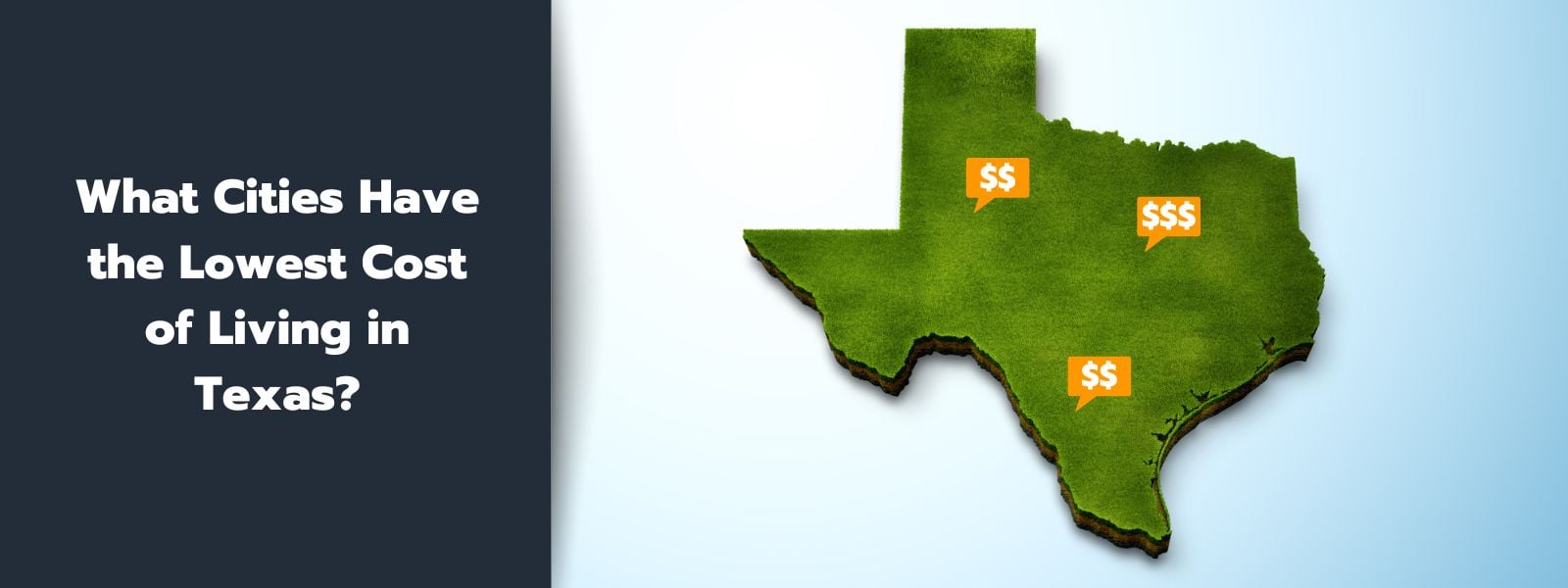
If you’re seeking budget-friendly cities in Texas, consider Lubbock, Amarillo, Brownsville-Harlingen, Waco, El Paso, San Antonio, and Houston. These places tend to have lower living costs than the national average.
Some of the most affordable metro areas in Texas include Midland-Odessa, Lubbock, Amarillo, and Abilene. Each has its own unique lifestyle—ranging from Houston’s urban energy to San Antonio’s history and culture—so it’s worth comparing costs and quality-of-life factors before choosing where to settle.

What’s the Cost of Living in Texas vs. California?
The top state people are moving to Texas from is California. According to the U.S. Census Bureau, in 2022, 102,442 Californians moved to Texas, while 42,279 Texans moved to California.
One of the biggest reasons for this shift is the dramatic difference in cost of living. Here’s an example using the cost-of-living index to compare a popular Texas city with a popular California city:
| Cost of Living Category | Austin, TX | San Francisco, CA | Cost Difference |
| Total | 101.8 | 188.7 | 46% less |
| Housing | 113.4 | 344.2 | 67% less |
| Utilities | 95 | 133.9 | 29% less |
| Groceries | 92.3 | 130.3 | 29% less |
| Transportation | 87 | 146.4 | 41% less |
| Healthcare | 105.8 | 123.6 | 14% less |
| Miscellaneous | 101.3 | 122.7 | 17% less |
The cost differences between San Francisco and Austin are significant—so it’s no surprise many people consider moving to Texas for a more affordable lifestyle.

Wrapping Up Our Guide to the Cost of Living in Texas
Moving to Texas can offer an affordable and fulfilling experience. To decide where to live, compare living costs across cities and align them with your budget.
Besides expenses, it’s also important to consider the job market, local amenities, and overall quality of life. With diverse cities, a strong economy, and living costs often lower than the national average, Texas can be a great option for people looking for value.
Finding a real estate agent you can trust is key when relocating. Helen Painter Group Realtors is here to offer local expertise and guidance.
A long-standing and trusted Fort Worth real estate agency, we’ve been serving buyers and sellers since 1958.
With over six decades of success, you’ll have peace of mind knowing your best interests are represented each step toward buying or selling a home. To learn more or speak with an agent, call (817) 923-7321 or contact us.

FAQs
What is the average cost of living in Texas?
Texas is often cited as being about 7–8% lower than the national average overall, though costs vary significantly by city—especially for housing and utilities.
What is the cost of living in Texas for a single person?
The cost of living in Texas for a single person depends on housing, city, and lifestyle. Many budgeting sources estimate groceries alone can be around $280 per month, while overall expenses vary widely based on rent/mortgage and transportation.
What is the cost of living in Texas for a family?
For families, the biggest factors are housing, childcare (if applicable), transportation, and groceries. Grocery estimates are often cited around $200 per week for a family of four, but actual costs vary by household and location.
What are grocery prices in Texas like?
Grocery prices in Texas vary city-to-city. Many areas are below the national average, while some higher-cost metros may be closer to or above the U.S. average.
Can Texas be more expensive than people expect?
Yes. While Texas can be affordable overall, costs like utilities (especially summer electricity bills), property taxes, and housing in certain cities can increase your total monthly budget.